
Where History Still Breathes: Judy Washbon’s Journey Into the World of Lewis and Clark
Where History Still Breathes:
Judy Washbon’s Journey Into the World of Lewis and Clark
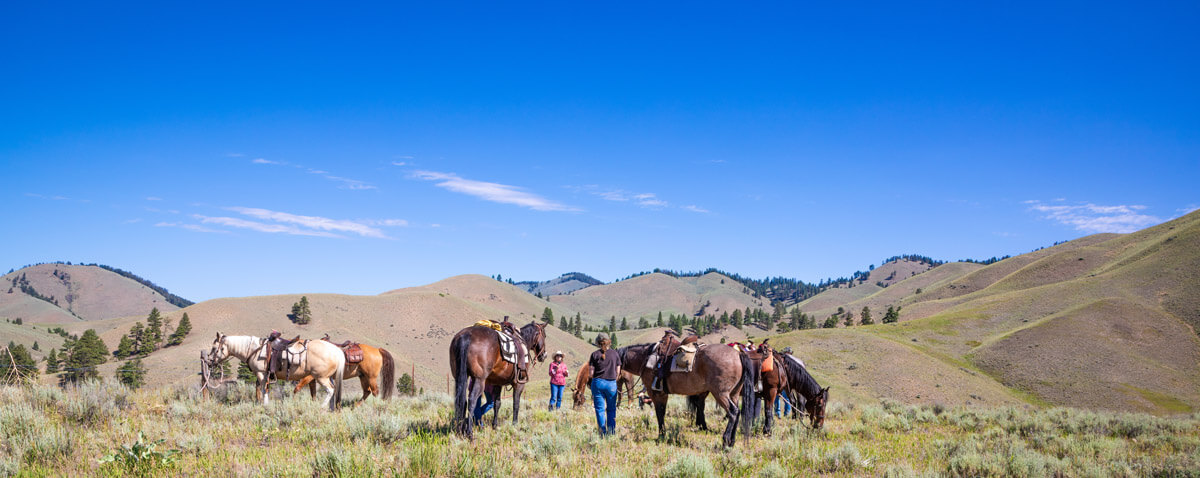
In the rugged, unspoiled landscape of Salmon, Idaho, the rivers still run wild, the mountains rise much as they did centuries ago, and the stories of the past feel present. For travelers seeking more than scenery, Salmon offers the chance to step directly into history. On the journey to the past, there are few people better suited as guide than local historian Judy Washbon.
Judy’s journey to Salmon mirrors the sense of discovery that draws so many visitors here. Raised in Dallas, she later settled in Jackson, Wyoming, where she spent nearly 20 years building a life with her husband. But it was a single trip to Salmon that changed their trajectory. Captivated by the valley’s raw beauty, they relocated within a year. Not long after moving, Judy discovered that this quiet Idaho valley played a role in one of America’s most iconic journeys: the Lewis and Clark Expedition. Even more compelling, the Salmon Valley is widely recognized as the birthplace of Sacagawea, the Shoshone woman who would become indispensable to the expedition’s survival. It wasn’t until reading Undaunted Courage, Stephen Ambrose’s historical account of the expedition, that Judy’s interest shifted into high gear. Ambrose’s suppositions and theories led Judy to seek out the sources for his various interpretations. Soon, she was devouring every text she could get her hands on. But that wasn’t enough. Judy wanted more than interpretation, she wanted to read the words of Lewis and Clark and form her own theories. She soon turned to the original journals of the expedition, diving into any primary document she could find. Her interest was now an immersion, and the growing passion required her husband to build a new set of bookcases.
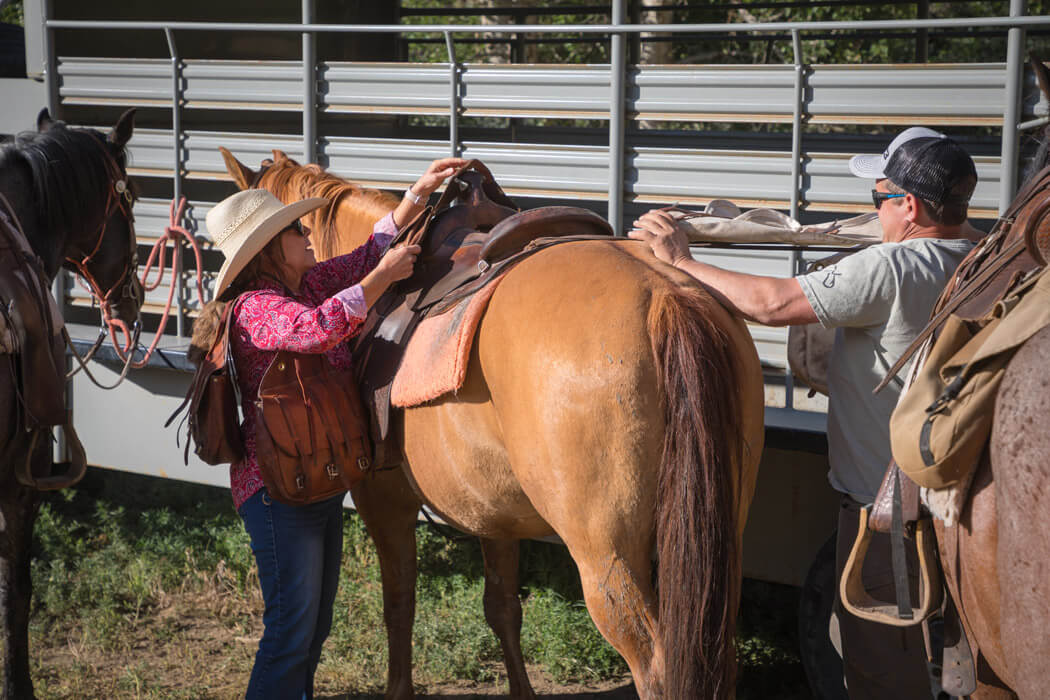
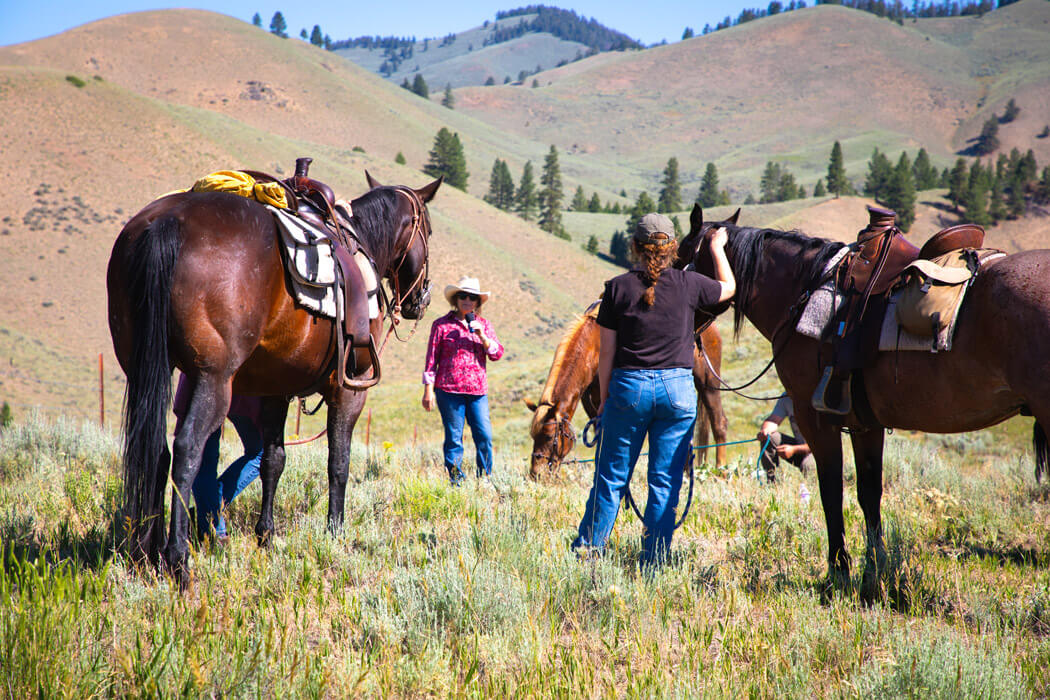
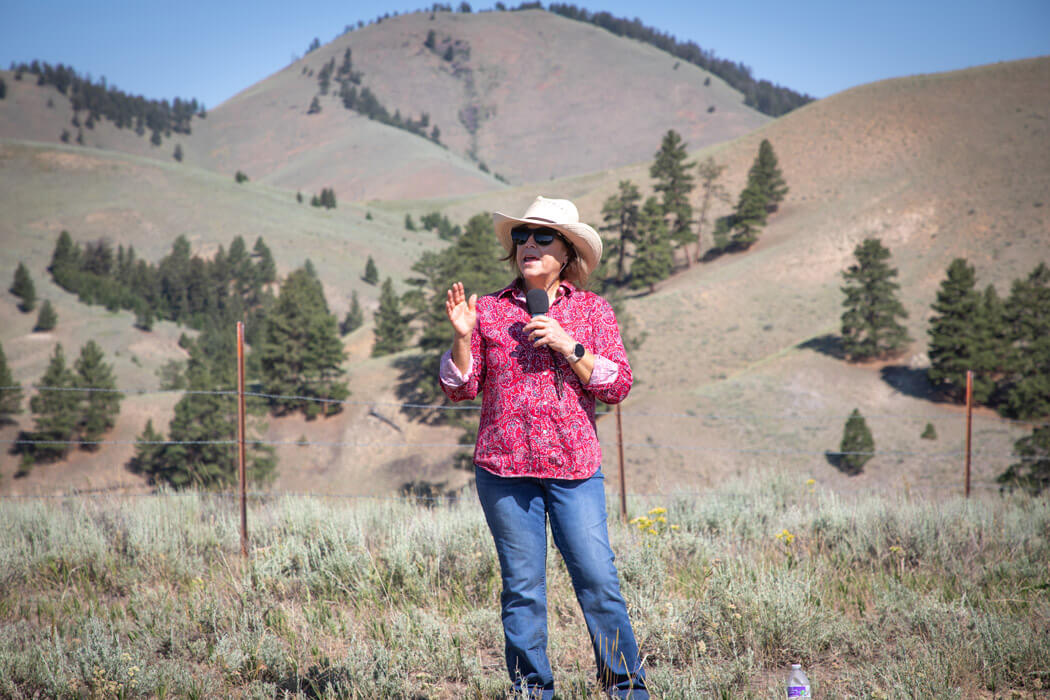
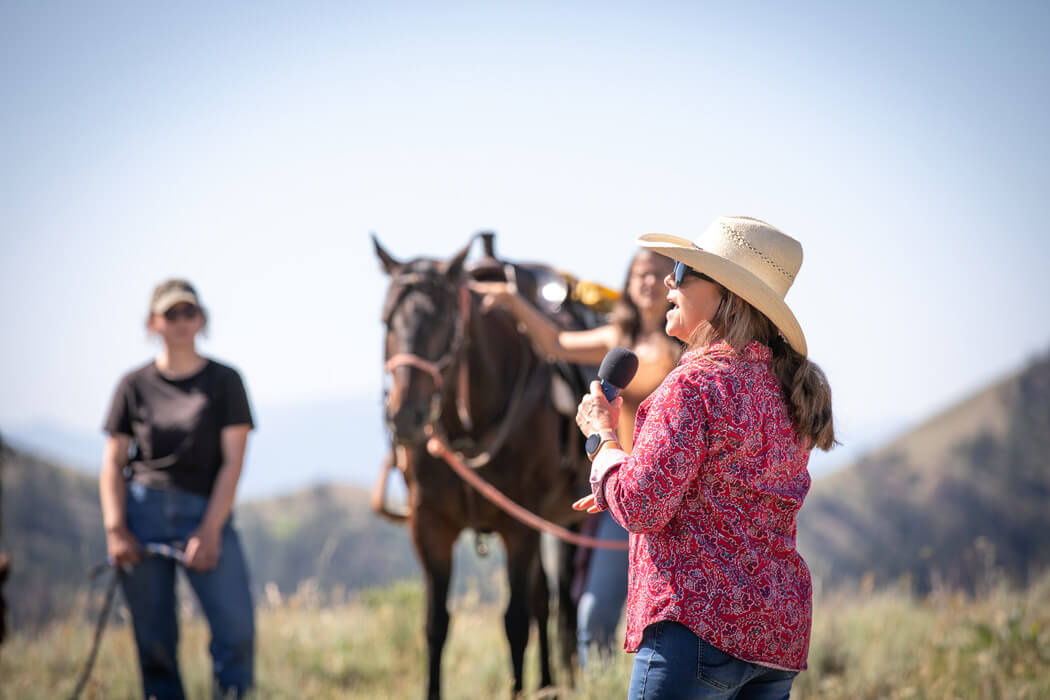
Today, that deep research translates into something visitors can experience firsthand. In her tenth year at the Sacajawea Interpretive, Cultural & Educational Center, Judy delivers three scheduled talks weekly throughout the peak travel season, offering historical context that enriches every mile of the surrounding landscape. For those looking for a more immersive experience, she also joins guided float trips and horseback excursions with local outfitters. These trips allow visitors to hear the stories while moving through the very terrain where they unfolded.
Judy’s knowledge is impressive, but it is her genuine interest and passionate storytelling that truly sets her apart. To her, the Lewis and Clark expedition is “the greatest American adventure in our history—bar none.” Though she’s shared her knowledge with hundreds of people, the stories never get old for her. She is always learning more, searching for anything that will bring the spark of interest to a listener’s eye–this is what motivates her, and where she excels. Judy doesn’t present her knowledge as a distant, polished narrative. She brings out the humanity, the humor, and the sheer improbability of the expedition.
I asked her to tell me more about her favorite figure, Merriwether Lewis. She describes him as the expedition’s intellectual, a deep thinker in contrast to Clark’s more outgoing nature. She finds herself especially drawn to his sharp, dry wit. Judy delights in recounting his near-mythic misadventures: falling off cliffs (more than once) and surviving dangerous encounters with bears. Judy delights in these heroic yet human tales, filled with resilience, curiosity, and moments of absurdity.
One of her favorite stories perfectly captures that spirit. When the expedition first encountered a prairie dog town, the men became determined to catch one. They committed nearly the entire crew to the effort, digging frantically and even hauling water to flood the burrows. After considerable effort, they succeeded. The captured prairie dog was eventually sent—alive—all the way back to President Jefferson in Washington, D.C., after wintering with the expedition. It’s a story that’s equal parts scientific curiosity and comedic persistence, and Judy relishes every detail.
Judy’s joy in recounting these tales is captivating, and contagious. She expertly blends historical fact with humanizing elements to craft stories that stay with travelers long after they leave. The rivers, mountains, and open skies look much as they did over two centuries ago. Visitors can stand along the same waterways, trace the same routes, and imagine the same uncertainties faced by the expedition. Through Judy’s work, Salmon becomes a place where history is not preserved behind glass, but lived out loud across the landscape. For those willing to slow down, listen, and explore, Salmon, Idaho offers a genuine connection to the past, set against one of the most beautiful backdrops in the American West.
For information on the Salmon, Idaho area, the Sacajawea Center, places to stay, eat, and much more go to visitsalmonvalley.com